
What Does FANS Stand For in Urology?
FANS stands for flexible and navigable suction ureteral access sheath: a ureteral access sheath (UAS) with a flexible distal segment and a channel for continuous suction. It is used during flexible ureteroscopy for kidney stones — retrograde intrarenal surgery (RIRS) — to evacuate stone dust and fragments while the stone is being treated (Uy 2026).
Two features separate FANS from a conventional sheath. A conventional UAS has a fixed tip and lets irrigation drain passively around the ureteroscope; authors describe it as limited by rigidity and lack of suction. A FANS sheath bends with the ureteroscope, so it can follow the scope towards the stone, and its suction channel actively removes fluid and fragments (Liu 2025; Alhefnawy 2026).
How a FANS Sheath Works During RIRS
Irrigation enters through the working channel of the flexible ureteroscope. With a FANS sheath connected to suction, outflow is aspirated through the space between the scope and the sheath, carrying stone dust and small fragments with it. The design aims to do three things at once:
1. Navigation into the calyces
Because the distal sheath is flexible, it can be advanced with the ureteroscope beyond the renal pelvis. In a 16-centre prospective study, 96% of FANS sheaths reached all calyces (Yuen 2026). Commercial FANS designs are not interchangeable: in a benchtop comparison of three 12/14 Fr sheaths, deflection, deflection force, suction flow and fragment removal all differed between products (Church 2026).
2. Evacuation of dust and fragments
Suction removes dust and fragments during lithotripsy, which is intended to raise single-session stone-free rates and reduce the need for basket extraction and ancillary procedures (Gauhar 2023; Cacciatore 2025).
3. Intrarenal pressure control
Intrarenal pressure (IRP) above 30 mmHg has been consistently associated with more postoperative complications, including sepsis (Yuen 2025). An EAU Endourology systematic review found that studies of pressure-monitoring FANS reported controlled IRP profiles alongside higher irrigation flow rates; it could not pool results because study methods differed too much (Altunhan 2026).
What drives aspiration efficiency? Bench data
In an in-vitro model, fragment aspiration peaked at an irrigation flow of 200 mL/min, improved when negative pressure was raised from 0.01 to 0.02 MPa, and was lowest in the lower calyx. Aspiration was 27.2% lower when the scope filled more of the sheath lumen (7.5 Fr scope in a 10/12 Fr sheath) than with a 12/14 Fr sheath (Ding 2025). These are bench findings. In clinical studies, intraoperative protocols vary and device characteristics are poorly reported (Uy 2026).
What the Clinical Evidence Shows
The FANS literature has grown quickly — from three studies in 2022 to more than 80 in 2025 — but it is dominated by single-centre retrospective series. An evidence map of 154 FANS and direct-in-scope suction (DISS) studies found 11 randomised trials, and 81% of those raised some concerns on risk of bias (Scilipoti 2026). Stone-free definitions also differ between studies, so rates are not directly comparable.
Randomised trials
| Trial | Patients | Comparison | Main findings |
|---|---|---|---|
| Cacciatore 2025 | 132 | FANS vs conventional UAS | 1-month stone-free rate (no fragment > 3 mm on CT) 95% vs 67%; operative time 55 vs 61 min; fewer re-interventions |
| Şahin 2026 | 161, 7 centres | FANS vs conventional UAS | 1-month stone-free rate 79.3% vs 63.3%; operative time shorter with the conventional sheath; more perioperative bleeding with FANS, with no difference in postoperative haemoglobin drop; postoperative complications similar |
| Eldib 2025 | 100, bilateral stones < 20 mm | FANS vs conventional UAS, same-session bilateral | Zero-fragment (grade A) rate 70% vs 20%; infection 4% vs 16%; operative time 48 vs 58 min |
| Alhefnawy 2026 | 217, stones 14–27 mm | FANS vs nephrostomy drainage vs conventional UAS | Stone-free rate 98.6% (FANS), 97.2% (nephrostomy), 81.9% (conventional UAS) |
| Zeng 2026 | 720, 12 centres, 2–3 cm renal stones | FANS ureteroscopy vs mini-PCNL (non-inferiority) | Immediate stone-free rate non-inferior (risk difference −1.4%); operative time 29 min longer; fewer transfusions; hospital stay 2.5 days shorter; greater quality-of-life improvement; no difference in infection-related complications |
| Wang 2026 | 326, 2–3 cm upper-tract stones | FANS ureteroscopy vs mini-PCNL | Comparable immediate and 1-month stone-free rates; less haemoglobin loss; shorter stay; longer operative time, except in the 2–2.5 cm subgroup |
Meta-analyses
Uy 2026 — 34 studies, 7,193 patients
Compared with a traditional UAS, FANS was associated with higher stone-free rates by any definition and lower rates of infection and complications, with no significant difference in operative time. In sensitivity analyses, there was no stone-free difference between FANS and a traditional UAS used with suction.
Shiomi da Cruz 2026 — 29 studies (4 randomised), 5,604 patients
Suction sheaths, fixed-tip or FANS, reduced residual fragments at late assessment (RR 0.53), fever (RR 0.43) and sepsis (RR 0.47) compared with traditional sheaths. Certainty was moderate for stone clearance and fever and lower for the other outcomes. A larger late benefit with flexible-tip sheaths (RR 0.47 vs 0.72 for fixed-tip) came from a post-hoc analysis and needs randomised confirmation.
Liu 2025 and Hinojosa-Gonzalez 2026
Eight studies with 1,816 patients: FANS gave higher stone-free rates on day 1 (OR 4.01) and at 30 days (OR 2.37) and less postoperative fever (OR 0.31), without significant differences in operative time or hospital stay (Liu 2025). A Bayesian network meta-analysis of 17 studies for stones ≤ 2 cm found higher stone-free rates (OR 2.5) and lower odds of sepsis (OR 0.40) with FANS (Hinojosa-Gonzalez 2026).
Taken together, the advantage of FANS over a conventional, non-suction sheath is consistent across trials and meta-analyses. Whether the flexible, navigable tip adds benefit beyond suction alone is not yet settled (Uy 2026; Shiomi da Cruz 2026).
Safety Profile and Limitations
The largest prospective series followed 394 adults treated with FANS in 25 centres for 30 days, with CT before and after surgery. The zero-fragment rate was 57.4%, and 97.2% had zero fragments or a single fragment ≤ 2 mm. Low-grade fever occurred in 3.3%, no patient developed sepsis, and low-grade ureteral injury occurred in 2%; one patient needed a transfusion and 11 underwent repeat ureteroscopy. Larger stone volumes lowered, and thulium fibre laser use raised, the chance of a zero-fragment result. The study had no comparison group (Gauhar 2024).
- Bleeding. In one randomised trial, perioperative bleeding was more frequent with FANS, although the postoperative haemoglobin drop did not differ (Şahin 2026).
- Acute kidney injury. In a prospective multicentre study of 210 patients, 6.2% developed acute kidney injury after RIRS with FANS; all cases were stage 1. There was no control group, and the authors call for a randomised comparison (Candela 2025).
- Operative time. Results vary: shorter than with a conventional sheath in some trials, longer in others, and longer than mini-PCNL for 2–3 cm stones (Cacciatore 2025; Şahin 2026; Zeng 2026).
- Sheath size and laser. Across suction-assisted ureteroscopy studies, larger sheath sizes and high-power Ho:YAG lasers were linked to higher rates of fever, urosepsis and ureteral injury (Corrales 2026).
Most clinical studies are single-centre (55.8%) and device characteristics are poorly reported (Scilipoti 2026; Uy 2026). Results should not be assumed to transfer between FANS designs or settings.
Choosing FANS Sheath Size and Length
Diameter. In 295 patients from the global FANS dataset, 10/12 Fr sheaths gave a 30-day stone-free rate similar to 11/13 or 12/14 Fr sheaths (96% vs 95%) and a higher zero-fragment rate (68% vs 53%), at the cost of longer operative time (50 vs 45 min); complication rates did not differ. The authors advise individualising sheath size (Kwok 2024). Bench data point the other way on aspiration, with larger sheaths relative to the scope clearing fragments more efficiently (Ding 2025), so neither finding is definitive. An EAU Endourology review also reported that an 11/13 Fr access sheath, compared with 13/15 Fr, was associated with a higher likelihood of intraoperative IRP ≥ 30 mmHg (OR 12.5) (Altunhan 2026).
Length. A 16-centre prospective study of 226 patients judged sheath length correct in 63.7% of cases, too long in 26.5% and too short in 9.7%. The best predictor was a dynamic measurement: ureteric catheter length on retrograde pyelogram from the upper-pole calyx to 5 cm beyond the urethral meatus (R = 0.7). The 30-day stone-free rate was 92.5% (Yuen 2026).
Female: 1.2 × ureteric catheter length − 2.1 cm Derived in a single multicentre cohort.
After FANS Ureteroscopy: Stent or Ureteric Catheter?
Practice still favours a double-J stent: one was placed in 84% of patients in a prospective multicentre FANS study (Candela 2025). In a propensity-matched analysis of 240 patients from the EAU Endourology and global FANS group, an overnight ureteric catheter was a safe alternative to a double-J stent in selected patients, after thorough inspection had ruled out injury and residual fragments, and the median postoperative stay was shorter. The choice of drainage was left to the surgeon, so the groups were not randomised (Castellani 2025).
FANS vs Conventional UAS vs Direct-in-Scope Suction (DISS)
Suction can be applied through the access sheath — fixed-tip or flexible — or through the ureteroscope itself (direct-in-scope suction, DISS). The evidence base differs markedly between them.
| Approach | Outflow | Tip | State of evidence |
|---|---|---|---|
| Conventional UAS | Passive, around the scope | Fixed | Comparator in the trials above |
| Suction UAS, fixed tip | Active suction | Fixed | Pooled with FANS in suction-sheath meta-analyses; no stone-free difference vs FANS in one sensitivity analysis (Shiomi da Cruz 2026; Uy 2026) |
| FANS | Active suction | Flexible, follows the scope | Randomised trials and several meta-analyses (Scilipoti 2026) |
| DISS | Suction through the ureteroscope | Not applicable | Earlier-stage and less mature; 56 DISS patients in a 2026 network meta-analysis, with a similar but less precise effect (Scilipoti 2026; Hinojosa-Gonzalez 2026) |
A narrative review of 44 studies found higher stone-free rates with suction sheaths, including FANS, in 15 studies, particularly with smaller sheaths and thulium fibre laser, and no significant stone-free differences in the DISS studies (Corrales 2026).
FANS — Frequently Asked Questions
What does FANS stand for in urology?
Flexible and navigable suction ureteral access sheath. It is an access sheath for flexible ureteroscopy whose tip bends with the scope and which removes irrigation fluid, stone dust and fragments by suction.
Is FANS better than a conventional ureteral access sheath?
Against a conventional, non-suction sheath, randomised trials and meta-analyses report higher stone-free rates and fewer infectious complications (Cacciatore 2025; Şahin 2026; Uy 2026). Against a conventional sheath used with suction, one meta-analysis found no stone-free difference (Uy 2026).
Does FANS reduce infection after ureteroscopy?
Suction sheaths reduced postoperative fever (RR 0.43, moderate certainty) and sepsis (RR 0.47, lower certainty) compared with traditional sheaths (Shiomi da Cruz 2026). In a 394-patient multicentre FANS series, no patient developed sepsis (Gauhar 2024).
Can FANS ureteroscopy replace mini-PCNL for 2–3 cm kidney stones?
Two randomised trials found comparable stone-free rates, less blood loss and shorter hospital stays with FANS ureteroscopy, at the cost of longer operative time (Zeng 2026; Wang 2026). A randomised trial comparing the two for 1–2 cm lower-pole stones has been registered (FLAME, NCT07159035) (Zhu 2025).
Which FANS sheath size should be used?
There is no single answer. Smaller 10/12 Fr sheaths gave a higher zero-fragment rate in one multicentre analysis but took longer (Kwok 2024), while bench data favour larger sheaths for aspiration (Ding 2025). Length can be estimated from a ureteric catheter measurement (Yuen 2026).
Is a stent always needed after FANS ureteroscopy?
Not always. In selected patients, after inspection confirms no injury or residual fragments, an overnight ureteric catheter was a safe alternative to a double-J stent in a propensity-matched analysis (Castellani 2025).
Envaste FANS Device
Envaste manufactures a FANS-type sheath, the FANS Suction Ureteral Access Sheath (Manawa™). This page summarises published evidence on FANS as a device class; it does not assess any specific Envaste device. Benchtop testing shows FANS designs differ in suction and deflection (Church 2026), so results from one design should not be assumed to apply to another.
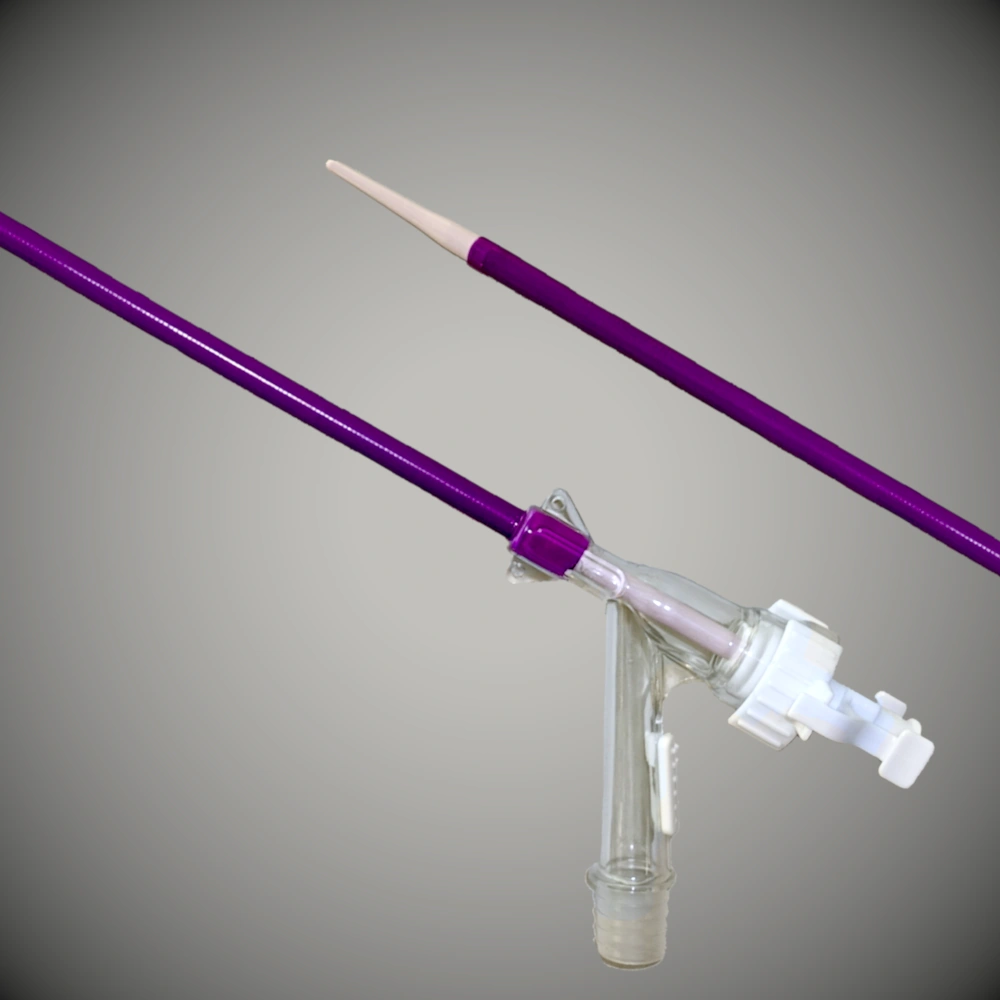
FANS Suction Ureteral Access Sheath (Manawa™)
Specifications, sizes and Instructions for Use.
References
- Alhefnawy MA, El-Karamany TM, Farag M, et al. Comparative evaluation of flexible and navigable suction sheath (FANS), percutaneous nephrostomy (PCN), and conventional ureteral access sheath (UAS) during retrograde intrarenal surgery: a randomized controlled trial. World J Urol. 2026;44(1):322. doi:10.1007/s00345-026-06410-4
- Altunhan A, Göksoy İ, Güneş B, et al. Intrarenal pressure monitoring and control strategies using suction in flexible ureteroscopy: an EAU Endourology systematic review of technologies and clinical outcomes. J Endourol. 2026. doi:10.1177/08927790261502363
- Cacciatore L, Minore A, Bonanno L, et al. Is flexible navigable suction ureteral access sheath (FANS) safer and more efficient than conventional sheaths? Italian multicentric experience. World J Urol. 2025;43(1):153. doi:10.1007/s00345-025-05520-9
- Candela L, Gauhar V, Somani B, et al. Acute kidney injury following retrograde intrarenal surgery (RIRS) with flexible and navigable suction ureteral access sheath (FANS): results from a prospective multicenter study. Minerva Urol Nephrol. 2025;77(3):356-364. doi:10.23736/S2724-6051.25.06274-3
- Castellani D, Somani BK, Fong KY, et al. Can flexible ureteroscopy using flexible and navigable suction ureteral access sheath (FANS-UAS) minimize postoperative double J stent placement? Results from a propensity score-matched analysis of 540 patients of the European Association of Urology Section of Endourology and global FANS collaborative study group. Investig Clin Urol. 2025;66(3):236-244. doi:10.4111/icu.20250071
- Church CA, Haynal E, Lim YJ, et al. Suction, flexion, and noise profile of three flexible and navigable suction ureteral access sheaths: a benchtop comparison. World J Urol. 2026;44(1). doi:10.1007/s00345-026-06253-z
- Corrales M, Chicaud M, Kutchukian S, et al. Suction devices in ureteroscopy: a narrative review. Fr J Urol. 2026;37(1):103280. doi:10.1016/j.fjurol.2026.103280
- Ding T, Xu Z, Huang Z, et al. Optimizing aspiration efficiency in RIRS: the impact of ratio of endoscope-sheath diameter, irrigation flow, and negative pressure in an vitro study. Urolithiasis. 2025;53(1):102. doi:10.1007/s00240-025-01773-6
- Eldib H, Abdelrahman M, Nouh I, et al. Efficacy and safety of bilateral same session flexible ureteroscopy using flexible and navigable suction ureteral access sheath (FANS) versus conventional access sheath: a prospective randomized comparative study. World J Urol. 2025;44(1):66. doi:10.1007/s00345-025-06126-x
- Gauhar V, Ong CSH, Traxer O, Chew BH. Step-by-step guide to flexible and navigable suction ureteric access sheath (FANS). Urol Video J. 2023;20:100250. doi:10.1016/j.urolvj.2023.100250
- Gauhar V, Traxer O, Castellani D, et al. Could use of a flexible and navigable suction ureteral access sheath be a potential game-changer in retrograde intrarenal surgery? Outcomes at 30 days from a large, prospective, multicenter, real-world study by the European Association of Urology Urolithiasis Section. Eur Urol Focus. 2024;10(6):975-982. doi:10.1016/j.euf.2024.05.010
- Hinojosa-Gonzalez DE, Gutierrez-Gamez A, Torres-Martinez M, et al. Suction-assisted ureteroscopy compared with traditional ureteroscopy for renal stones ≤ 2 cm: a systematic review, Bayesian network meta-analysis and meta-regression. World J Urol. 2026;44(1):651. doi:10.1007/s00345-026-06759-6
- Kwok JL, Somani B, Sarica K, et al. Multicenter outcome analysis of different sheath sizes for flexible and navigable suction ureteral access sheath (FANS) ureteroscopy: an EAU Endourology collaboration with the global FANS study group. Urolithiasis. 2024;52(1):162. doi:10.1007/s00240-024-01662-4
- Liu Q, Zeng T, Zhu S, et al. Flexible and navigable suction ureteral access sheath versus traditional ureteral access sheath for flexible ureteroscopy in renal and proximal ureteral stones: a meta-analysis of efficacy and safety. BMC Urol. 2025;25(1):127. doi:10.1186/s12894-025-01817-4
- Şahin MF, Doğan Ç, Teke K, et al. Comparison of flexible and navigable suction versus conventional ureteral sheath in retrograde intrarenal surgery: a randomized controlled prospective RIRSearch group study. J Endourol. 2026;40(11):1183-1189. doi:10.1177/08927790261480580
- Scilipoti P, Zorzi F, Gonzalez CG, et al. Flexible and navigable suction ureteric access sheath and direct-in-scope suction in endourology: a systematic evidence map of study characteristics and research trends. BJU Int. 2026. doi:10.1111/bju.70498
- Shiomi da Cruz JA, Terada BD, Gonçalves FGA, et al. Suction versus traditional ureteral access sheaths in retrograde intrarenal surgery: an updated systematic review and meta-analysis of stone-free rates and complications. World J Urol. 2026;44(1). doi:10.1007/s00345-026-06873-5
- Uy M, Moryousef J, Wang L, et al. Flexible and navigable suction ureteral access sheaths for the treatment of urolithiasis: systematic review and meta-analysis. Eur Urol Focus. 2026;12(4):752-760. doi:10.1016/j.euf.2025.08.008
- Wang R, Qi X, Li C, et al. F-URS with FANS versus mPCNL for 2-3 cm UUTS: a RCT with a subgroup analysis of 2-2.5 cm stones. BJU Int. 2026;138(4):687-693. doi:10.1111/bju.70367
- Yuen SKK, Zhong W, Chan YS, et al. Current utility, instruments, and future directions for intra-renal pressure management during ureteroscopy: scoping review by global research in intra-renal pressure collaborative group initiative. Ther Adv Urol. 2025;17:17562872251314809. doi:10.1177/17562872251314809
- Yuen SKK, Castellani D, El Hajj A, et al. How do we choose the optimal length of flexible and navigable suction ureteral access sheaths (FANS): an EAU Endourology and AUSET prospective multicenter analysis. World J Urol. 2026;44:113. doi:10.1007/s00345-026-06200-y
- Zeng G, Jiang K, Liu S, et al. Flexible ureteroscopy with a flexible and navigable suction ureteral access sheath versus mini-percutaneous nephrolithotomy for treatment of 2-3 cm renal stones: an international, multicenter, randomized, noninferiority trial. Eur Urol. 2026;89(1):45-54. doi:10.1016/j.eururo.2025.06.001
- Zhu W, Zhong J, Wang K, et al. Flexible ureteroscopy with a flexible and navigable suction ureteral access sheath versus mini-percutaneous nephrolithotomy for 1-2 cm lower pole renal stones: protocol for an international, multicentre, randomized non-inferiority trial (FLAME trial). BJUI Compass. 2025;6(12):e70114. doi:10.1002/bco2.70114