
Nephrostomy
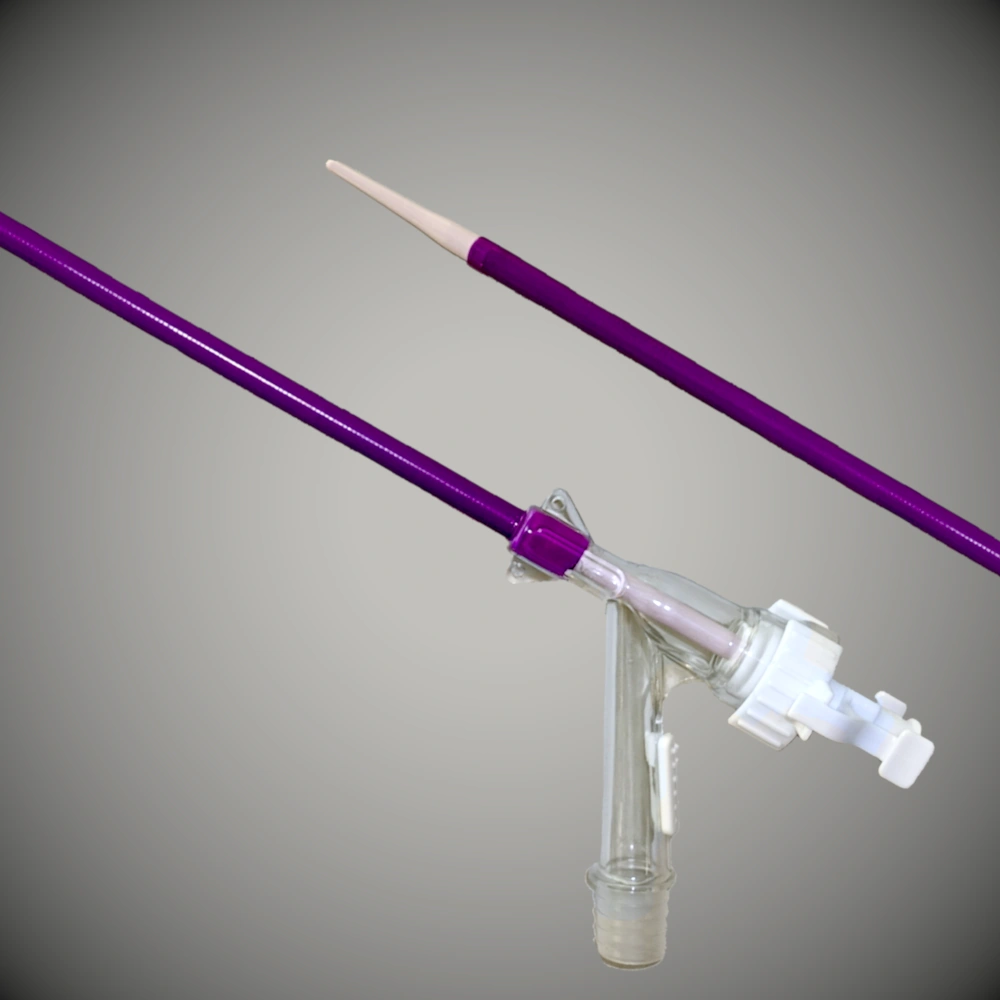
Suction Access SheathManawa™ Nephrostomy Suction
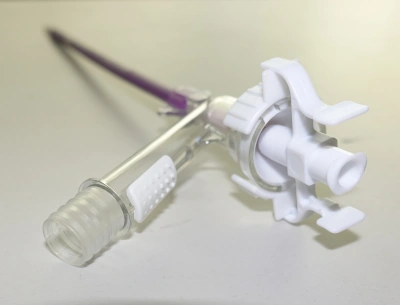
The Manawa™ Nephrostomy suction sheath reduces intrarenal pressure, improve vision, remove stone fragments and dust while shortening treatment time and lowering incidence of complications.
Nephrostomy Suction Sheath Features
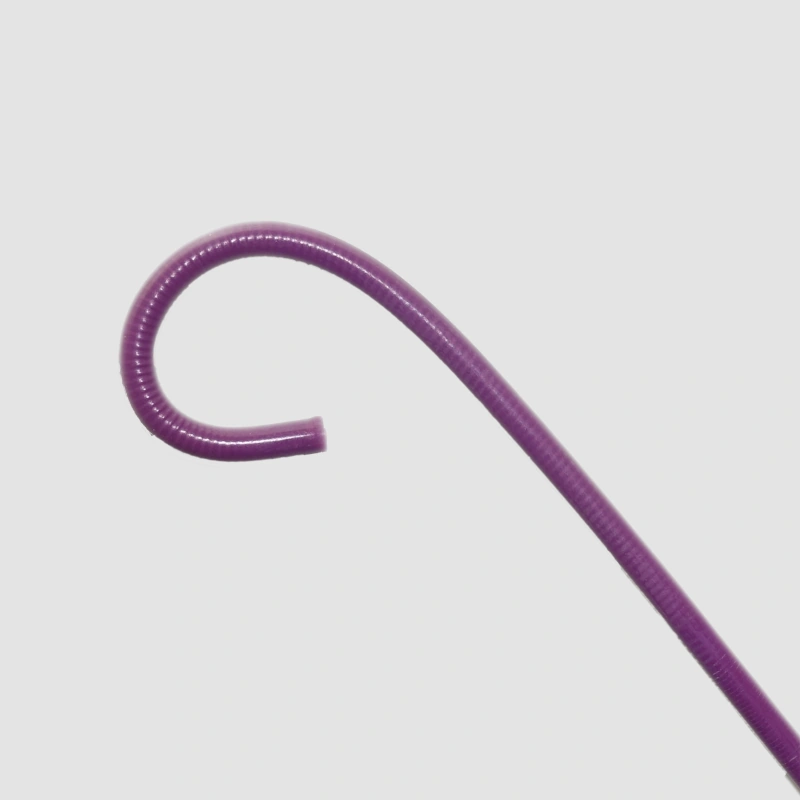
- Superior pushability yet still flexible sheath distal end to access the kidney calyx and upper ureter.
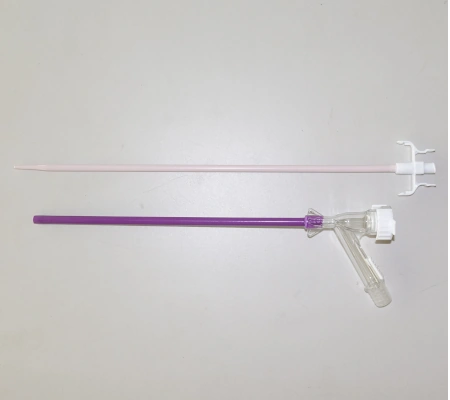
- Unique funnel-like cone design to facilitate scope entry, protecting your high-value optics from damage during insertion.
- Innovative valve design to ensure efficient suction control and pressure management.
- Manual control of the suction intensity via pressure ventilation slider.
- Hydrophilic coating on the dilator and sheath for smooth insertion.
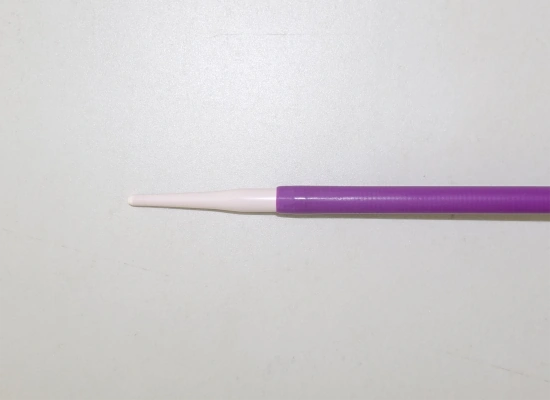
- Tapered dilator with rounded tip for atraumatic introduction.
- Seamless transition between dilator and sheath to reduce risks of trauma.
- Reinforced sheath to provide stability and strength during placement.
- Radiopaque marker band on the sheath tip to confirm placement during fluoroscopy.
Need a custom configuration or a private-label version? Explore our catheter design services, or see our ISO 13485 catheter manufacturing capabilities.

Nephrostomy Sheath Sizes and Working Lengths
| Reference Part Number |
Internal Diameter French Size |
External Diameter French Size |
Sheath Length | Tip Length | Guidewire | Hydrophilic Coating |
|---|---|---|---|---|---|---|
| Super-mini PCNL | ||||||
| UAS-0510713S | 10.7F | 12.7F | 13CM | 22MM | 0.038" | Dilator Tip & Sheath |
| UAS-0510715S | 10.7F | 12.7F | 15CM | 22MM | 0.038" | Dilator Tip & Sheath |
| UAS-0510717S | 10.7F | 12.7F | 17CM | 22MM | 0.038" | Dilator Tip & Sheath |
| UAS-0510721S | 10.7F | 12.7F | 21CM | 22MM | 0.038" | Dilator Tip & Sheath |
| UAS-0512013S | 12F | 14F | 13CM | 24MM | 0.038" | Dilator Tip & Sheath |
| UAS-0512015S | 12F | 14F | 15CM | 24MM | 0.038" | Dilator Tip & Sheath |
| UAS-0512017S | 12F | 14F | 17CM | 24MM | 0.038" | Dilator Tip & Sheath |
| UAS-0512021S | 12F | 14F | 21CM | 24MM | 0.038" | Dilator Tip & Sheath |
| UAS-0514013S | 14F | 16F | 13CM | 27MM | 0.038" | Dilator Tip & Sheath |
| UAS-0514015S | 14F | 16F | 15CM | 27MM | 0.038" | Dilator Tip & Sheath |
| UAS-0514017S | 14F | 16F | 17CM | 27MM | 0.038" | Dilator Tip & Sheath |
| UAS-0514021S | 14F | 16F | 21CM | 27MM | 0.038" | Dilator Tip & Sheath |
| Mini PCNL | ||||||
| UAS-0516013S | 16F | 18F | 13CM | 24MM | 0.038" | Dilator Tip & Sheath |
| UAS-0516015S | 16F | 18F | 15CM | 24MM | 0.038" | Dilator Tip & Sheath |
| UAS-0516017S | 16F | 18F | 17CM | 24MM | 0.038" | Dilator Tip & Sheath |
| UAS-0516021S | 16F | 18F | 21CM | 24MM | 0.038" | Dilator Tip & Sheath |
| UAS-0518013S | 18F | 20F | 13CM | 22MM | 0.038" | Dilator Tip & Sheath |
| UAS-0518015S | 18F | 20F | 15CM | 22MM | 0.038" | Dilator Tip & Sheath |
| UAS-0518017S | 18F | 20F | 17CM | 22MM | 0.038" | Dilator Tip & Sheath |
| UAS-0518021S | 18F | 20F | 21CM | 22MM | 0.038" | Dilator Tip & Sheath |
| UAS-0520013S | 20F | 22F | 13CM | 22MM | 0.038" | Dilator Tip & Sheath |
| UAS-0520015S | 20F | 22F | 15CM | 22MM | 0.038" | Dilator Tip & Sheath |
| UAS-0520017S | 20F | 22F | 17CM | 22MM | 0.038" | Dilator Tip & Sheath |
| UAS-0520021S | 20F | 22F | 21CM | 22MM | 0.038" | Dilator Tip & Sheath |
| Standard PCNL | ||||||
| UAS-0522013S | 22F | 24F | 13CM | 22MM | 0.038" | Dilator Tip & Sheath |
| UAS-0522015S | 22F | 24F | 15CM | 22MM | 0.038" | Dilator Tip & Sheath |
| UAS-0522017S | 22F | 24F | 17CM | 22MM | 0.038" | Dilator Tip & Sheath |
| UAS-0522021S | 22F | 24F | 21CM | 22MM | 0.038" | Dilator Tip & Sheath |
| UAS-0524013S | 24F | 26F | 13CM | 22MM | 0.038" | Dilator Tip & Sheath |
| UAS-0524015S | 24F | 26F | 15CM | 22MM | 0.038" | Dilator Tip & Sheath |
| UAS-0524017S | 24F | 26F | 17CM | 22MM | 0.038" | Dilator Tip & Sheath |
| UAS-0524021S | 24F | 26F | 21CM | 22MM | 0.038" | Dilator Tip & Sheath |
| UAS-0526013S | 26F | 28F | 13CM | 22MM | 0.038" | Dilator Tip & Sheath |
| UAS-0526015S | 26F | 28F | 15CM | 22MM | 0.038" | Dilator Tip & Sheath |
| UAS-0526017S | 26F | 28F | 17CM | 22MM | 0.038" | Dilator Tip & Sheath |
| UAS-0526021S | 26F | 28F | 21CM | 22MM | 0.038" | Dilator Tip & Sheath |
Why PCNL Tracts Obstruct and What Suction Changes
A percutaneous tract is a short, wide conduit, which sounds like it should drain freely. In practice it is the fragments that close it. During lithotripsy, pieces large enough to lodge accumulate in the sheath lumen around the nephroscope, and once the outflow path is packed, the irrigation still going in has nowhere to go.
That is the moment intrarenal pressure rises sharply in PCNL — not steadily through the case, but in spikes while the tract is obstructed and the lithotripter is still running. A suction-integrated sheath clears the lumen continuously instead of waiting for the surgeon to notice and withdraw, so the obstruction that drives those spikes does not form.
The secondary benefit is time. Fragments evacuated through the sheath are fragments that do not need to be grasped and withdrawn individually. For the clinical framework around pressure thresholds and monitoring, see our guide to optimising intrarenal pressure.
Choosing Tract Diameter and Sheath Length
Two decisions are independent here, and both matter. Diameter follows the instrument and the stone burden; length follows the patient.
Sheath lengths of 13, 15, 17 and 21 cm exist because the distance from skin to collecting system varies more than the tract diameter does. A sheath that is too short leaves the hub pressed against the flank and the tip barely inside the calyx; one that is too long wastes nephroscope working length and makes angulation harder. Measure the tract on the access imaging rather than defaulting to a familiar size — body habitus drives this more than anything else.
Tip length scales from 22 to 27 mm with sheath diameter, keeping the dilator taper gradual across the range, and every reference runs over a 0.038" guidewire with hydrophilic coating on both the dilator tip and the sheath.
The full set of references, with inner and outer French sizes for each length, is in the sizing table above.
Standard PCNL and Mini-PCNL
The case for suction is not the same at both ends of the tract-size range, and it is worth being clear about why.
In standard PCNL, the tract is wide enough that passive outflow is usually adequate until fragments pack it. Suction here is about preventing the obstruction events rather than about baseline drainage — the pressure problem is intermittent and tied to lithotripsy activity.
In mini-PCNL, the arithmetic changes. A smaller tract means a smaller annular space around the nephroscope, so the irrigation-to-outflow ratio is unfavourable from the start and pressure is elevated for much of the case rather than in spikes. Active suction is doing continuous work, not occasional rescue, which is why it matters more as tract size comes down.
The same funnel-cone entry, leak-free valve and manual pressure-ventilation slider are used across the range, so the handling is consistent whichever tract size the case calls for.
Combined Anterograde and Retrograde Access
Complex staghorn and calyceal diverticulum stones are often treated with simultaneous percutaneous and retrograde access. In that configuration the nephrostomy sheath is the primary pressure vent: it is the wider of the two routes, and suction applied there decompresses the whole collecting system rather than just the percutaneous side.
That has a practical consequence for the retrograde team. With active suction running at the nephrostomy port, the ureteroscope can irrigate more freely than it otherwise could, because the fluid has a driven exit rather than competing for the annular gap around the scope.
For the retrograde half of a combined approach, see the FANS Suction Ureteral Access Sheath (Manawa™), and for tract dilatation before sheath placement, the Nephrostomy Balloon Dilator (Tahina™).