
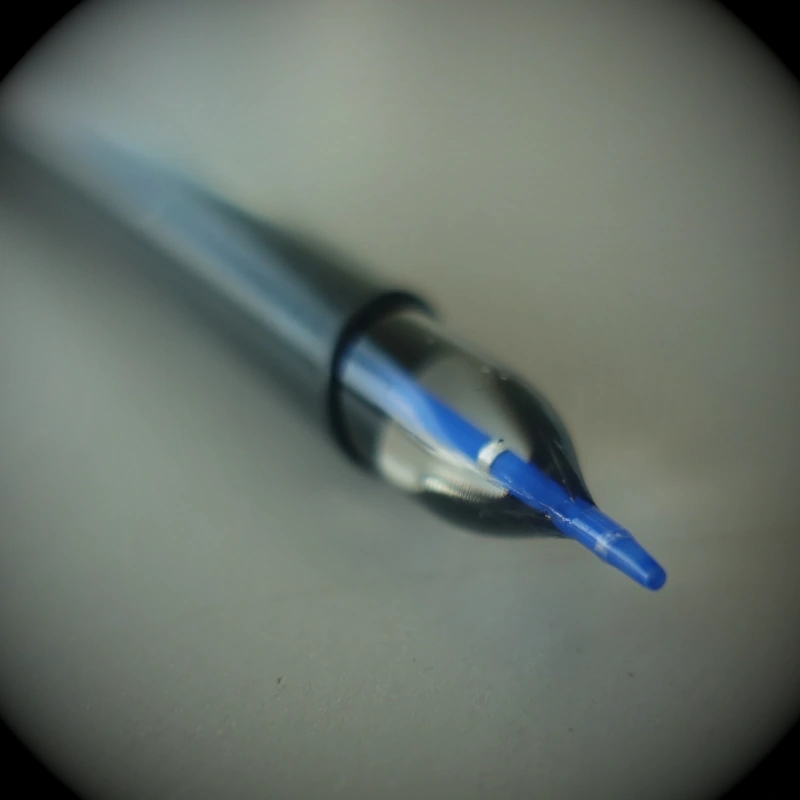
Nephrostomy Balloon DilatorTahina™ Nephrostomy Catheter
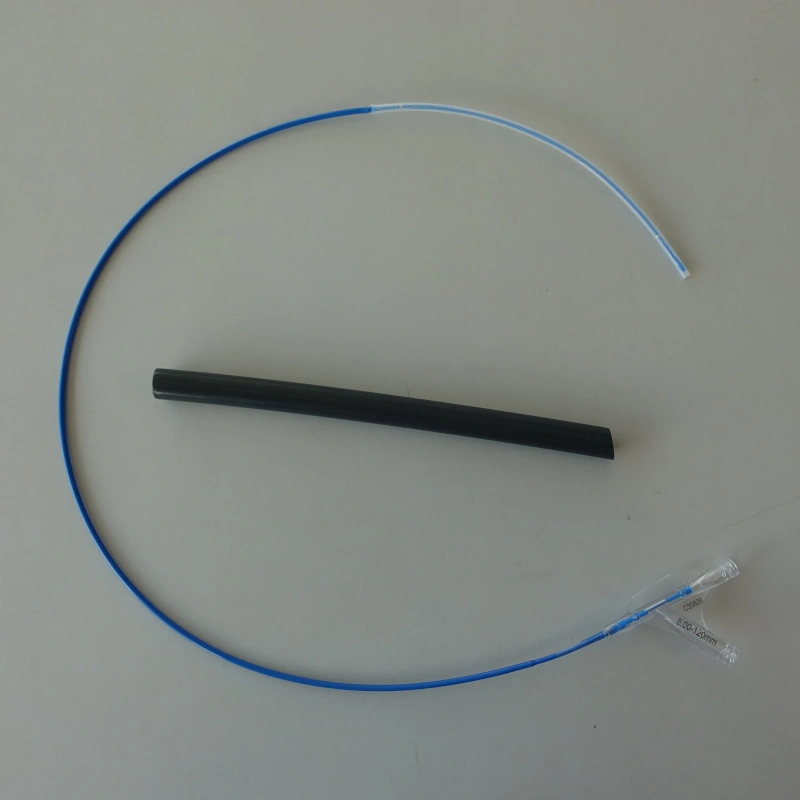
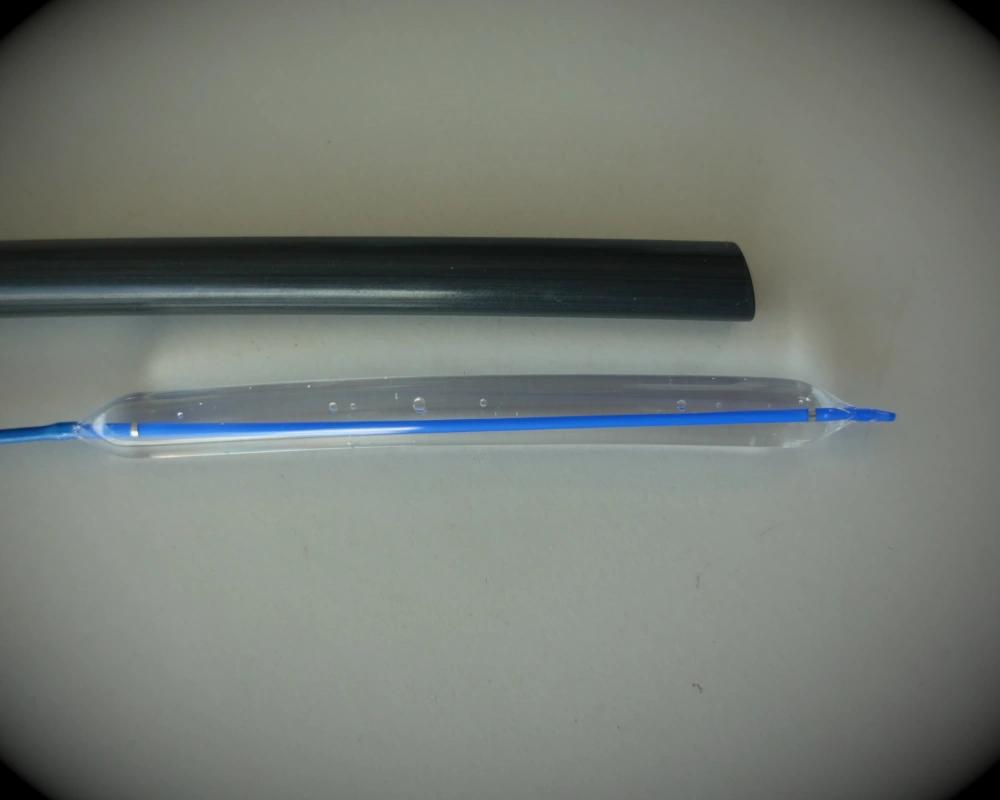
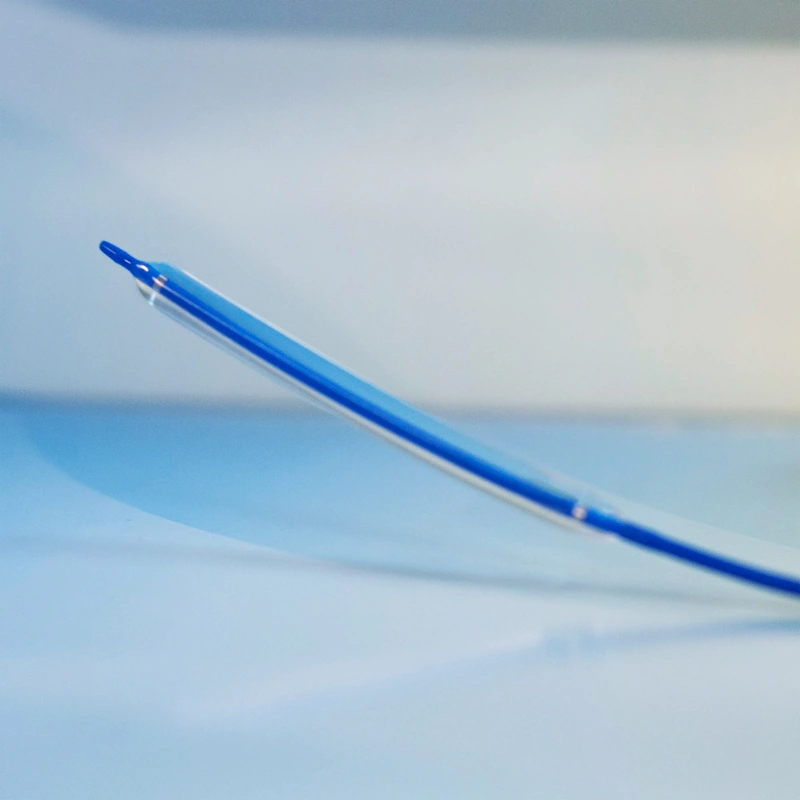
The Tahina™ Nephrostomy Balloon Dilator creates the percutaneous nephrostomy access tract with high-pressure balloon dilatation. Designed for PCNL procedures, it enables safe and efficient one-step dilation with an integrated reinforced PTFE sheath for immediate tract access.
Nephrostomy Balloon Dilator Features
- High-pressure balloon rated to 17ATM for reliable and efficient nephrostomy tract dilatation.
- Non-compliant balloon for precise, controlled diameter expansion without overexpansion.
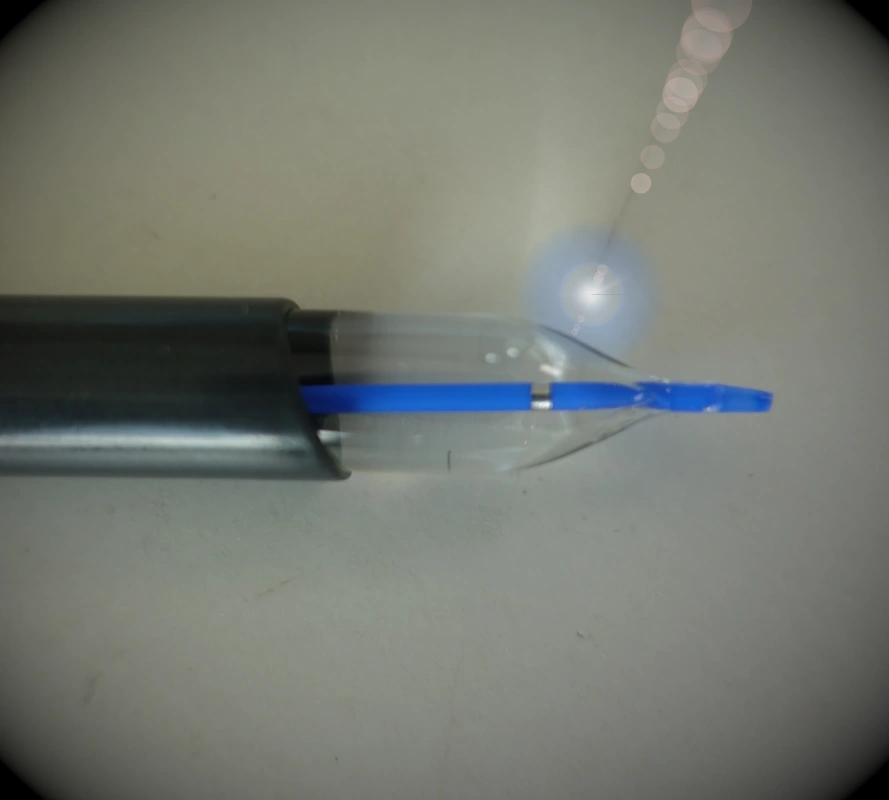
- Integrated reinforced PTFE sheath for immediate nephrostomy tract access post-dilatation.
- Hydrophilic coating on the balloon and shaft for smooth, atraumatic insertion.
- Tapered tip with rounded end for atraumatic introduction into the nephrostomy tract.
- Radiopaque marker bands to confirm balloon placement under fluoroscopy.
- Delivery over standard 0.038" guidewires for secure, controlled percutaneous access.
- Available in 24Ch (8.0mm) and 30Ch (10.0mm) diameters for patient-specific PCNL sizing.
Need a custom configuration or a private-label version? Explore our catheter design services, or see our ISO 13485 catheter manufacturing capabilities.
Balloon Diameters, Lengths and Sheath Specifications
| Reference Part Number |
Inflated Balloon Diameter |
Balloon Length | Rated Burst Pressure |
Catheter Length |
Sheath Material |
|---|---|---|---|---|---|
| UDB-0308120S | 24Ch (8.0MM) | 12CM | 17ATM | 55CM | Radiopaque PTFE |
| UDB-0310120S | 30Ch (10.0MM) | 12CM | 17ATM | 55CM | Radiopaque PTFE |
One-Step Tract Dilatation with an Integrated Sheath
The Tahina™ Nephrostomy Balloon Dilator carries a reinforced PTFE sheath already mounted over the balloon. The tract is dilated and the working sheath is left in place in a single manoeuvre — there is no separate step to advance an Amplatz sheath over a dilated tract that is already trying to close.
That sequence matters because a dilated percutaneous tract is not a stable structure. Renal parenchyma and perinephric tissue recoil, and the interval between withdrawing a dilator and seating a sheath is where access is lost and bleeding is provoked. Dilating with the sheath already in position removes that interval.
The sheath is radiopaque PTFE, so its position is visible under fluoroscopy alongside the balloon's own marker bands, and the low surface friction of PTFE is what allows a nephroscope to be passed and exchanged through it repeatedly.
Choosing 24Ch or 30Ch for the Tract
Two references cover the range: 24Ch (8.0 mm) and 30Ch (10.0 mm), both with a 12 cm balloon on a 55 cm catheter.
- •24Ch (8.0 mm) — the smaller tract, where parenchymal trauma and bleeding risk are the governing concerns and the stone burden is manageable through a narrower working channel
- •30Ch (10.0 mm) — standard PCNL access, where fragment clearance rate and instrument choice matter more than tract diameter
The 12 cm balloon length is chosen to span the full thickness of the tract in one inflation, from skin through muscle and perinephric fat into the collecting system. A shorter balloon would require repositioning, and a partially dilated tract is harder to re-enter accurately than an undilated one.
Both references are delivered over a standard 0.038" guidewire, so the wire placed during percutaneous access carries the dilator directly.
Non-Compliant Construction at 17 ATM
The balloon is non-compliant, and in tract dilatation that property is the point rather than a specification detail. A non-compliant balloon reaches its nominal diameter and stops: raising pressure further drives dilatation of the tissue, not expansion of the balloon.
In a percutaneous tract, that predictability is a safety property. A compliant balloon that keeps growing with pressure would dilate the easiest tissue first — usually not the fibrous layer that is actually resisting — and the final tract diameter would depend on how hard the operator inflated rather than on the device. A 30Ch balloon produces a 30Ch tract.
The rated burst pressure of 17 ATM is the ceiling for that behaviour, not a working target. Dilatation is complete when the waist disappears under fluoroscopy; pressure beyond that point adds risk without adding diameter.
Balloon Dilatation Compared with Serial Dilators
Percutaneous tracts are established either by passing progressively larger rigid or semi-rigid dilators over the wire, or by a single balloon inflation. The two approaches put different stresses on the kidney.
Serial dilators
- • Multiple passes over the wire
- • Shearing force along the tract with each pass
- • Repeated opportunity to lose or kink the wire
- • Separate step to place the working sheath
Balloon dilatation
- • One inflation to full diameter
- • Radial force rather than shearing
- • Wire position undisturbed throughout
- • Sheath already carried into position
Once the tract is established, the Nephrostomy Suction Access Sheath (Manawa™) adds active fragment clearance and pressure control for the lithotripsy phase.