
PCNL Tract Sizes: Standard and Mini-PCNL
Percutaneous nephrolithotomy (PCNL) reaches the collecting system through a tract created from the skin to a calyx over a guidewire. The tract is then dilated and a working sheath is placed for the nephroscope. Standard PCNL uses 24–30 Fr tracts and mini-PCNL about 12–22 Fr (EAU 2026). Smaller variants are described under different names, and terminology is not uniform between studies.
In a meta-analysis of randomised trials, mini-PCNL had stone-free rates similar to standard PCNL, with fewer overall complications and a reduced need for blood transfusion (Sharma 2022). The trade-off is a narrower outflow channel: irrigation leaves the kidney through a smaller sheath, which is where intrarenal pressure and suction come in (see below).
In short: guidelines report similar safety and effectiveness across dilation methods (EAU 2026). The trial differences are modest and mostly concern access time, fluoroscopy time and haemoglobin drop. Suction sheaths in mini-PCNL show the most consistent benefit in the current literature.
Four Ways to Dilate a PCNL Tract
Four techniques dominate the literature. They differ in how many steps it takes to reach the final tract size, and in how the working sheath ends up in position.
| Method | How it works |
|---|---|
| Amplatz serial dilation | Semi-rigid plastic dilators of increasing size are passed one after another over the guidewire, and the working (Amplatz) sheath is advanced over the last dilator. |
| Metal telescopic (Alken) | Coaxial metal dilators telescope over one another on a central guide rod until the target size is reached; the sheath is then passed over them. |
| Balloon dilation | A high-pressure balloon is positioned across the tract over the guidewire and inflated in one step. The working sheath is advanced over the inflated balloon, or is already mounted on it. |
| One-shot dilation | A single dilator of the final size is passed directly over the guidewire, without the intermediate sizes, and the sheath is placed over it. |
Amplatz and metal telescopic dilation are often grouped together as serial (or sequential) dilation. One-shot and balloon dilation are both single-step techniques, which is why they are often compared against serial dilation as a group.
What the Evidence Shows: Balloon vs Amplatz vs One-Shot
The comparative evidence is a mix of small randomised trials and meta-analyses that pool randomised and non-randomised studies. Most outcome differences are small, and several meta-analyses flag the quality of their included studies.
| Study | Design | Comparison | Main findings |
|---|---|---|---|
| Srivastava 2017 | RCT, 4 arms | Amplatz vs Alken vs balloon vs one-shot | Dilation fluoroscopy time lower with one-shot (36.8 s) and balloon (38.1 s) than Alken (62.1 s) and Amplatz (67.0 s); no difference in access time, haemoglobin drop, complications or success; balloon the most expensive |
| Pakmanesh 2019 | RCT, ultrasound-guided | Amplatz vs balloon | Short dilation (tract not dilated to its full length) 57.6% vs 36.4% (p = 0.08), and 81% vs 44% for lower-pole access (p = 0.02); operation longer with Amplatz (80 vs 65 min); balloon more expensive; bleeding and complications similar |
| Peng 2019 | Meta-analysis, 7 RCTs, 697 patients | One-shot vs serial | Access time about 110 s shorter and fluoroscopy time shorter with one-shot; haemoglobin drop about 2.3 g/L smaller; no difference in successful dilation, stone-free, transfusion or complication rates |
| Peng 2020 | Meta-analysis, 1 RCT + 5 controlled trials, 1,317 patients | Balloon vs Amplatz, fluoroscopy-guided | Smaller haemoglobin drop (MD −0.21) and access time 2.61 min shorter with balloon; no difference in transfusion, complications, successful dilation, stone-free rate, fluoroscopy time or operative time |
| Ding 2024 | Meta-analysis, 6 studies, 1,189 patients | Balloon vs non-balloon, ultrasound-guided | Balloon associated with smaller haemoglobin drop (MD −0.26), fewer transfusions (OR 0.47), shorter tract creation (−1.30 min) and operative time (−5.23 min); authors note that some included studies were of low quality |
| Dehong 2013 | Meta-analysis, 4 RCTs + 8 controlled trials, 6,820 patients | Amplatz, Alken, balloon and one-shot | One-shot had shorter dilation fluoroscopy time and smaller haemoglobin decrease than metal telescopic dilation, particularly after previous open renal surgery; in patients without previous open surgery, balloon had lower transfusion and shorter operation than Amplatz |
Taken together, the single-step techniques (balloon and one-shot) consistently shorten fluoroscopy or access time, and some analyses report less bleeding with balloon dilation. Stone-free rates do not differ between methods. Cost runs the other way: balloon dilation was the most expensive method in both randomised trials that reported cost (Srivastava 2017; Pakmanesh 2019). The EAU guideline summarises the methods as similar in safety and effectiveness (EAU 2026).
Tract Size and Bleeding
Tract diameter also affects bleeding. In a contemporary cohort treating 10–20 mm renal stones, 24 Fr and 18 Fr balloon dilators gave the same stone-free rate (95.2% vs 95.4%). The 24 Fr group had more postoperative gross haematuria (5 vs 2 cases) and a larger haemoglobin drop on the first postoperative day, with no difference in transfusion or embolisation (Perri 2025).
The randomised evidence points the same way at the level of technique: mini-PCNL matched standard PCNL on stone clearance with fewer complications and fewer transfusions (Sharma 2022). Tract size is therefore usually chosen from the stone burden and the instruments needed, with the smallest tract that allows efficient clearance.
Suction Sheaths in Mini-PCNL
Conventional mini-PCNL relies on pressurised irrigation to flush fragments out through the sheath, which may raise intrarenal pressure and lengthen the operation (Liang 2023). A suction sheath, also called a vacuum-assisted access sheath, adds a side channel connected to negative pressure, so fluid and fragments are drawn out continuously.
Meta-analyses
- Adhoni 2026 (EAU Section of Endourology; 14 studies, 2,510 patients): suction shortened operating time by 17.45 min, raised the stone-free rate (OR 1.92) and lowered postoperative fever (OR 0.45) and sepsis (OR 0.45). Overall complications were lower and hospital stay was 0.79 days shorter. Transfusion and haemoglobin deficit did not differ.
- Li 2025 (10 randomised trials): higher immediate stone-free rate (OR 2.29) and 3-month stone-free rate (OR 2.72); intrarenal pressure 8.25 mmHg lower; lower fever (OR 0.40) and transfusion (OR 0.43). The operative-time reduction (13.86 min) came with very high heterogeneity (I² = 98%).
- Chen 2021 (7 studies, 1,655 patients) and Zhu 2021 (3 RCTs, 2 case-controlled studies): shorter operative time, higher stone-free rate and lower fever or infection rates with suction, without a difference in transfusion (Zhu 2021).
A multicentre randomised trial
Liang 2023 randomised 120 patients with 2–4 cm stones across six centres to an 18F vacuum-assisted or an 18F conventional sheath. Mean intrarenal pressure during lithotripsy was 12.0 vs 20.4 mmHg, and time above 30 mmHg was 6.7 vs 113.4 seconds. Stone removal was faster (26.9 vs 35.7 min) with fewer grasper passes. Blood loss and complications did not differ. The stone-free advantage was present at 3 days but not at 30 days.
Limits of the evidence: many of the included studies come from a small number of high-volume centres, stone-free definitions and imaging differ, and heterogeneity is high for some outcomes. The EAU guideline reports shorter operations and fewer minor complications with suction during PCNL (EAU 2026).
Intrarenal Pressure During PCNL
PCNL generally runs at lower intrarenal pressure than flexible ureteroscopy, because irrigation drains through the sheath. A review of reported ranges found 3–40.8 cmH2O for PCNL and 10–45 cmH2O for mini-PCNL, against 40.8–199.35 cmH2O for retrograde intrarenal surgery (Tokas 2019). A larger systematic review linked miniaturisation of PCNL sheaths with higher pressure, while recording a wide range with both mini and standard PCNL (Croghan 2023).
Pressure varies within a procedure. In a randomised study measuring pressure with a pressure-sensing guidewire, coaxial dilation with mini-PCNL sheaths produced much higher peak pressure during dilation than 24F balloon dilation (36.6 and 38.6 vs 6.9 mmHg). During nephroscopy, the non-suction mini sheath produced the highest peaks (41.8 mmHg), above the suction sheath (19.1) and standard PCNL (24.2). The highest values occurred during retrograde pyelography and when the nephroscope passed a narrow infundibulum (Khargi 2025).
Why it matters: in mini-PCNL, each 1 mmHg rise in mean renal pelvic pressure was associated with 54.2 mL/h more irrigation fluid absorption. Transient spikes above 100 mmHg occurred in 9% of cases, mostly when the sheath was obstructed by stone fragments or clot (Wang 2025). Keeping the outflow channel clear is therefore as important as the irrigation setting.
Choosing a Dilation Method and Sheath
No single method is superior for every patient. The published comparisons suggest weighing the following factors.
| Method | Reported advantages | Reported drawbacks |
|---|---|---|
| Balloon | Single step; shorter fluoroscopy and access time; less haemoglobin drop in some meta-analyses; fewer short dilations than Amplatz in one ultrasound-guided trial | Highest device cost in trials that reported it |
| One-shot | Single step; shorter access and fluoroscopy time than serial dilation; low cost | Fewer data in specific subgroups |
| Amplatz / Alken (serial) | Widely available; low cost; extensive experience | More steps and more fluoroscopy; more short dilations with Amplatz in one trial |
| Suction sheath (mini-PCNL) | Shorter operations, higher stone-free rates, fewer febrile and septic complications, lower intrarenal pressure | Evidence concentrated in few centres; heterogeneous outcome definitions |
Previous open renal surgery was a factor in one meta-analysis, where one-shot outperformed metal telescopic dilation particularly in operated kidneys (Dehong 2013). Local cost, imaging (ultrasound or fluoroscopy) and the surgeon's experience will usually decide between methods whose outcomes are otherwise close.
PCNL Tract Dilation — Frequently Asked Questions
Is balloon dilation better than Amplatz dilation in PCNL?
Not on stone clearance. Meta-analyses report shorter access time and a smaller haemoglobin drop with balloon dilation, with similar stone-free and complication rates (Peng 2020; Ding 2024). Balloon dilation costs more, and the EAU guideline rates dilation methods as similar in safety and effectiveness (EAU 2026).
Does balloon dilation reduce bleeding in PCNL?
Some analyses show a smaller haemoglobin drop, and one ultrasound-guided meta-analysis found fewer transfusions (OR 0.47), but study quality was mixed (Ding 2024). A fluoroscopy-guided meta-analysis found no difference in transfusion rate (Peng 2020).
What is one-shot dilation in PCNL?
A single dilator of the final tract size passed directly over the guidewire, skipping intermediate sizes. Against serial dilation it shortened access time by about 110 seconds and reduced fluoroscopy time, without affecting stone-free or complication rates (Peng 2019).
What tract size is used for mini-PCNL?
About 12–22 Fr, compared with 24–30 Fr for standard PCNL (EAU 2026). Mini-PCNL matched standard PCNL on stone-free rate with fewer complications and transfusions in a meta-analysis of randomised trials (Sharma 2022).
Do suction sheaths reduce infection after mini-PCNL?
The meta-analyses report lower postoperative fever and, in the largest, lower sepsis (OR 0.45 for both) with suction sheaths compared with conventional sheaths (Adhoni 2026; Li 2025).
Does mini-PCNL raise intrarenal pressure?
It can. Smaller sheaths were associated with higher pressure in a systematic review (Croghan 2023), and peaks were highest with a non-suction mini sheath in a randomised study (Khargi 2025). A suction sheath lowered mean pressure in a multicentre trial (12.0 vs 20.4 mmHg) (Liang 2023).
Envaste PCNL Devices
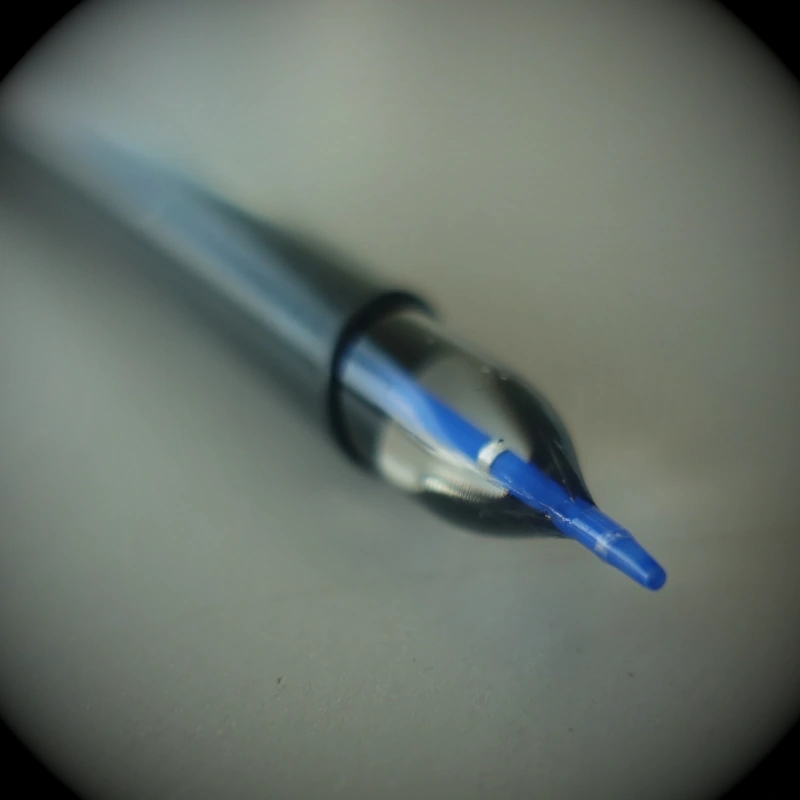
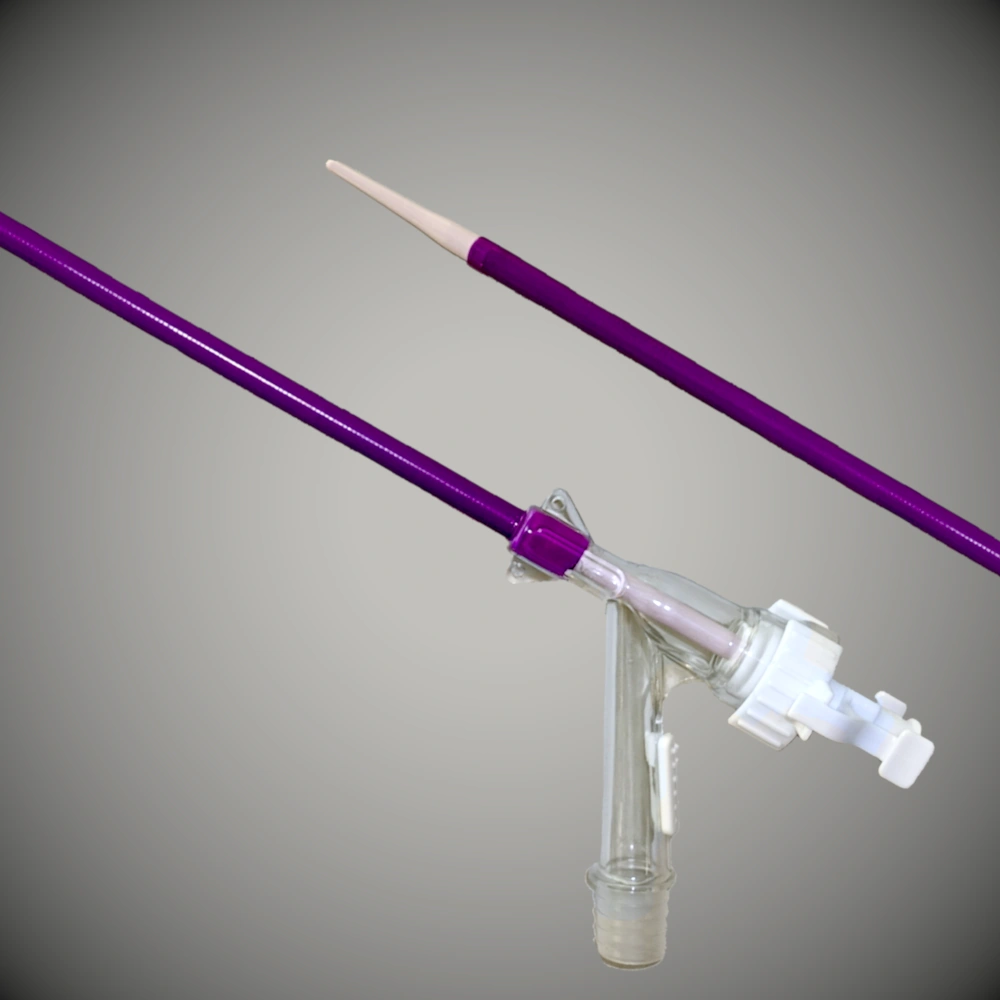
Envaste manufactures a nephrostomy balloon dilator and a nephrostomy suction sheath. This page summarises published evidence on dilation methods and suction sheaths as device classes; it does not assess any specific Envaste device, and results from one design should not be assumed to apply to another.
References
- Adhoni MZU, Pooley E, Byrnes K, et al. Suction in mini-percutaneous nephrolithotomy: a meta-analysis from the European Association of Urology Section of Endourology. BJU Int. 2026;137 Suppl 3:S29-S37. doi:10.1111/bju.16891
- Chen D, Chen C, Xie Y, et al. Suctioning Versus Traditional Access Sheath in Mini-Percutaneous Nephrolithotomy: A Systematic Review and Meta-analysis. Urol J. 2021;19(1):1-8. doi:10.22037/uj.v18i.6773
- Croghan SM, Skolarikos A, Jack GS, et al. Upper urinary tract pressures in endourology: a systematic review of range, variables and implications. BJU Int. 2023;131(3):267-279. doi:10.1111/bju.15764
- Dehong C, Liangren L, Huawei L, et al. A comparison among four tract dilation methods of percutaneous nephrolithotomy: a systematic review and meta-analysis. Urolithiasis. 2013;41(6):523-30. doi:10.1007/s00240-013-0598-z
- Ding M, Zhu K, Zhang W, et al. Comparing Balloon Dilation to Non-Balloon Dilation for Access in Ultrasound-Guided Percutaneous Nephrolithotomy: A Systematic Review and Meta-Analysis. Int Braz J Urol. 2024;50(1):7-19. doi:10.1590/S1677-5538.IBJU.2023.0373
- European Association of Urology. EAU Guidelines on Urolithiasis. EAU Guidelines Office, Arnhem, The Netherlands; 2026. uroweb.org/guidelines/urolithiasis
- Khargi R, Serna JS, Gupta K, et al. Does Mini-Percutaneous Nephrolithotomy Cause Increased Intrarenal Pressure During Percutaneous Nephrolithotomy and is This Mitigated by a Suctioning Sheath? A Randomized Control Trial. J Endourol. 2025;39(3):214-221. doi:10.1089/end.2024.0390
- Li Y, Zhou Z, Zhang Y, et al. Effectiveness and safety of suction-assisted versus traditional access sheaths in minimally invasive percutaneous nephrolithotomy: a meta-analysis of 10 randomized trials. BMC Urol. 2025;26(1):18. doi:10.1186/s12894-025-02023-y
- Liang S, Duan X, Liu J, et al. Vacuum-Assisted vs Conventional Minimally Invasive Percutaneous Nephrolithotomy for the Treatment of Two-to-Four-Centimeter Stones: A Multicenter Prospective and Randomized Trial. J Endourol. 2023;37(12):1241-1247. doi:10.1089/end.2023.0324
- Pakmanesh H, Daneshpajooh A, Mirzaei M, et al. Amplatz versus Balloon for Tract Dilation in Ultrasonographically Guided Percutaneous Nephrolithotomy: A Randomized Clinical Trial. Biomed Res Int. 2019;2019:3428123. doi:10.1155/2019/3428123
- Peng PX, Lai SC, Ding ZS, et al. One-shot dilation versus serial dilation technique for access in percutaneous nephrolithotomy: a systematic review and meta-analysis. BMJ Open. 2019;9(4):e025871. doi:10.1136/bmjopen-2018-025871
- Peng PX, Lai SC, Seery S, et al. Balloon versus Amplatz for tract dilation in fluoroscopically guided percutaneous nephrolithotomy: a systematic review and meta-analysis. BMJ Open. 2020;10(7):e035943. doi:10.1136/bmjopen-2019-035943
- Perri D, Besana U, Maltagliati M, et al. A comparison on safety and efficacy between 24 Fr versus 18 Fr pneumatic balloon dilators for percutaneous treatment of renal stones between 10 and 20 mm: results from a contemporary cohort. World J Urol. 2025;43(1):79. doi:10.1007/s00345-025-05445-3
- Sharma G, Sharma A, Devana SK, et al. Mini Versus Standard Percutaneous Nephrolithotomy for the Management of Renal Stone Disease: Systematic Review and Meta-analysis of Randomized Controlled Trials. Eur Urol Focus. 2022;8(5):1376-1385. doi:10.1016/j.euf.2021.07.014
- Srivastava A, Singh S, Dhayal IR, et al. A prospective randomized study comparing the four tract dilation methods of percutaneous nephrolithotomy. World J Urol. 2017;35(5):803-807. doi:10.1007/s00345-016-1929-9
- Tokas T, Skolarikos A, Herrmann TRW, et al. Pressure matters 2: intrarenal pressure ranges during upper-tract endourological procedures. World J Urol. 2019;37(1):133-142. doi:10.1007/s00345-018-2379-3
- Wang G, Zhang L, Jin Q, et al. Renal pelvic pressure drives fluid absorption in mini-percutaneous nephrolithotomy: a quantitative model for absorption rate. BJU Int. 2025;136(3):529-536. doi:10.1111/bju.16812
- Zhu L, Wang Z, Zhou Y, et al. Comparison of vacuum-assisted sheaths and normal sheaths in minimally invasive percutaneous nephrolithotomy: a systematic review and meta-analysis. BMC Urol. 2021;21(1):158. doi:10.1186/s12894-021-00925-1